HomeFrom pioneering vision to stainless steel excellence: 65 years of Aperam Genk
From pioneering vision to stainless steel excellence: 65 years of Aperam Genk
For 65 years, Aperam Genk has been shaped by a pioneering spirit, technological ambition and a strong connection with its region. What began as a bold industrial vision in the early 1960s has evolved into a modern stainless steel site, with a history marked by transformation, innovation and continuous investment.
A vision born from a changing region
At the end of the 1950s, Limburg was at a turning point. The golden years of coal mining were coming to an end, and the region was looking for new opportunities for industrial development.
It was in this context that Belgian industrialist Evence Coppée saw an opportunity. He recognised the significant growth potential of stainless steel in Europe, where consumption was still far below that of the United States. During a trade mission to the United States in 1959, led by the then Prince Albert of Belgium, he established a connection with Edward Hanley, head of Allegheny Ludlum, a leading American stainless steel producer. His ambition was clear: to combine American expertise in stainless steel with the European market knowledge of his group, Espérance-Longdoz.
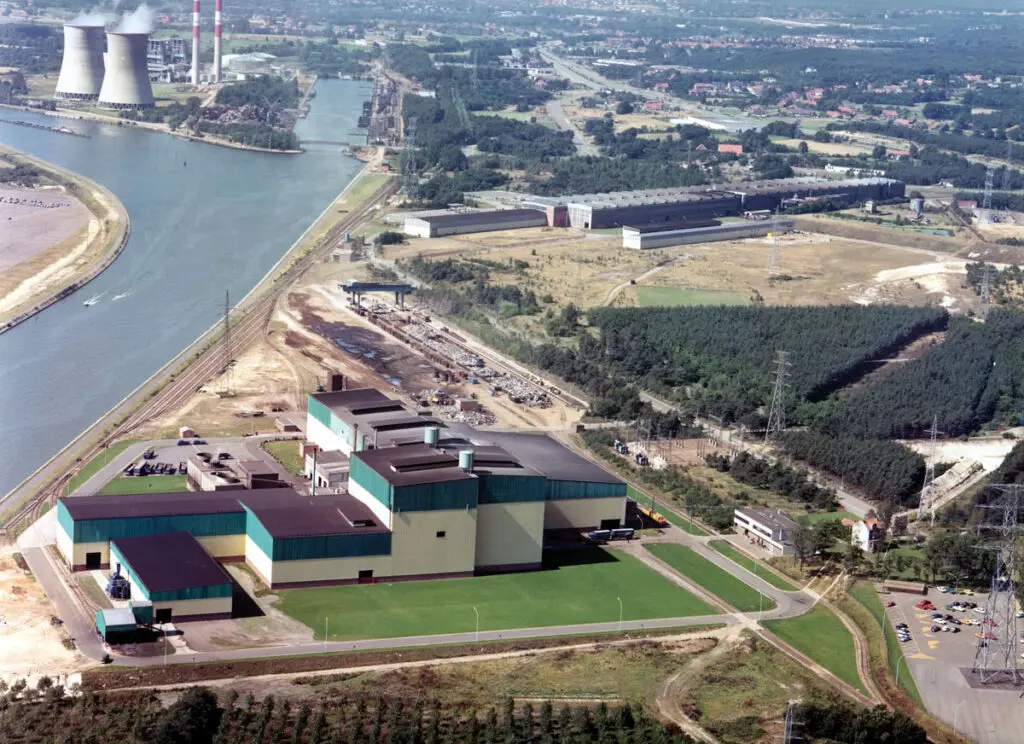
The location of the future plant was also strategically chosen. Genk offered space for development, direct access to the Albert Canal and a region ready for a new industrial chapter. For Coppée, the choice also had a personal dimension: his father had helped design the garden city of the Winterslag coal mine, giving the family a longstanding connection with the region.
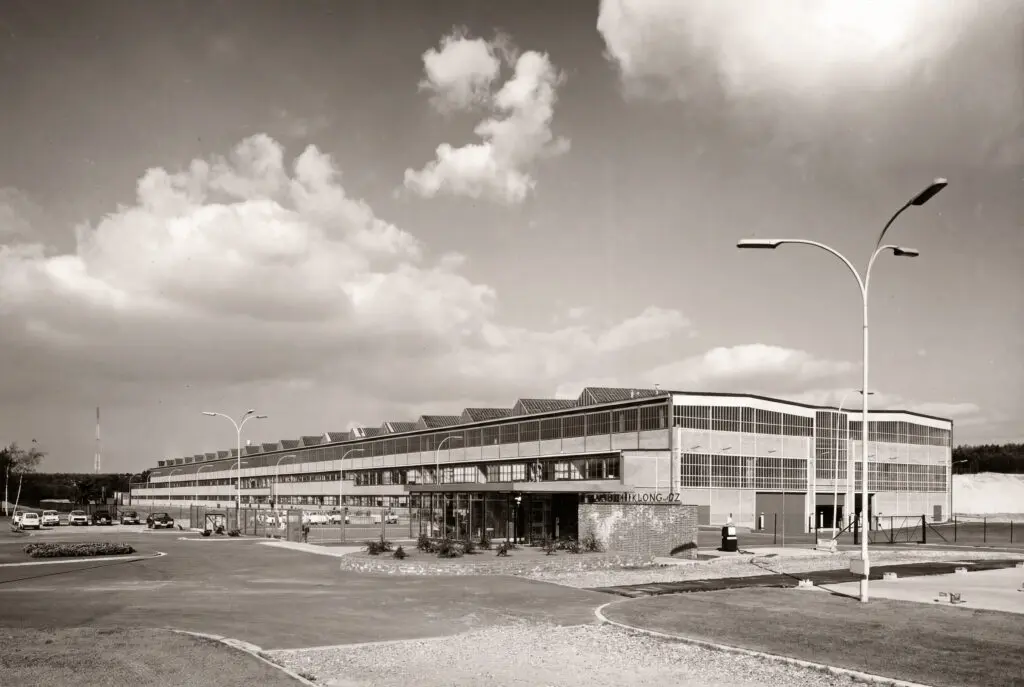
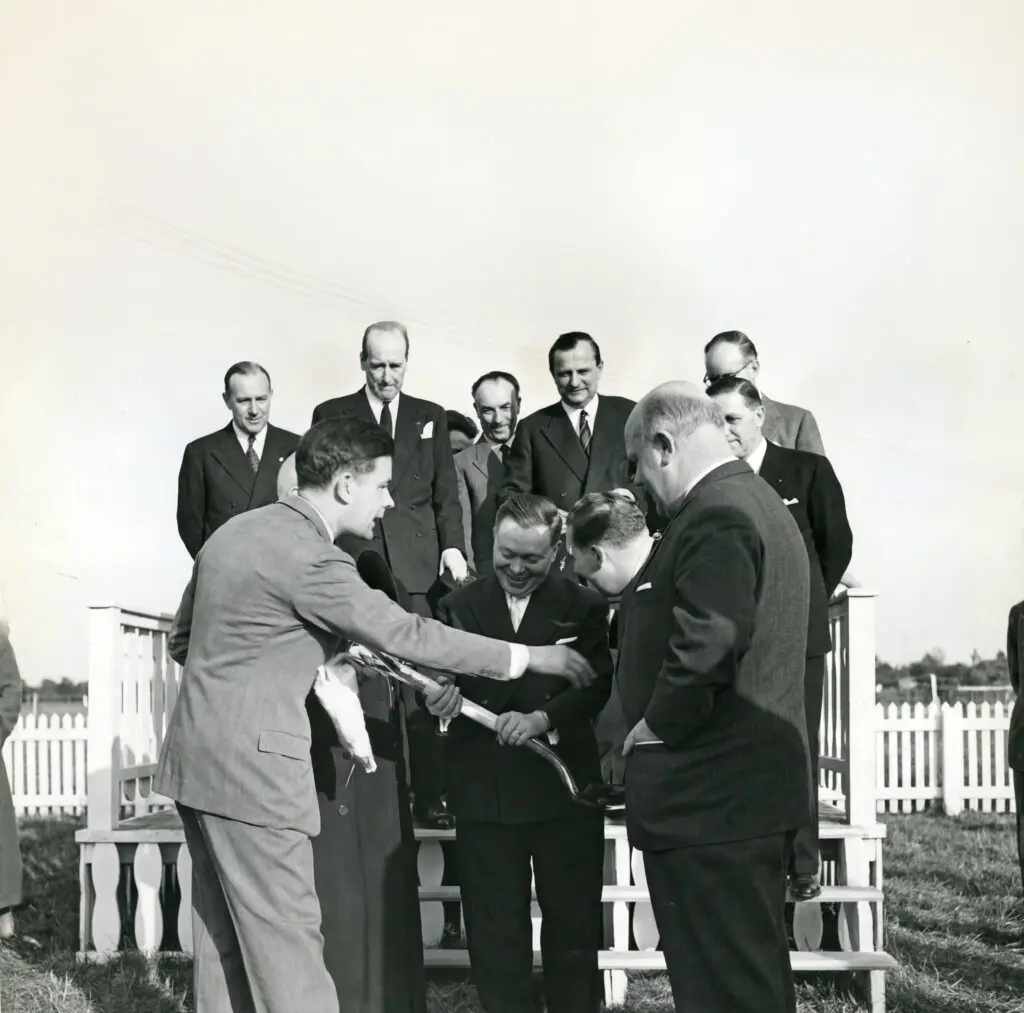
On 10 March 1961, Allegheny-Longdoz (ALZ) was officially established as a partnership between Allegheny Ludlum and Espérance-Longdoz. Construction progressed at remarkable speed. Governor Louis Roppe laid the first symbolic shovel of earth on 16 March 1961, and just over two years later, on 7 November 1963, the new plant was officially inaugurated.
Establishment of Allegheny-Longdoz
Pioneering on the shop floor
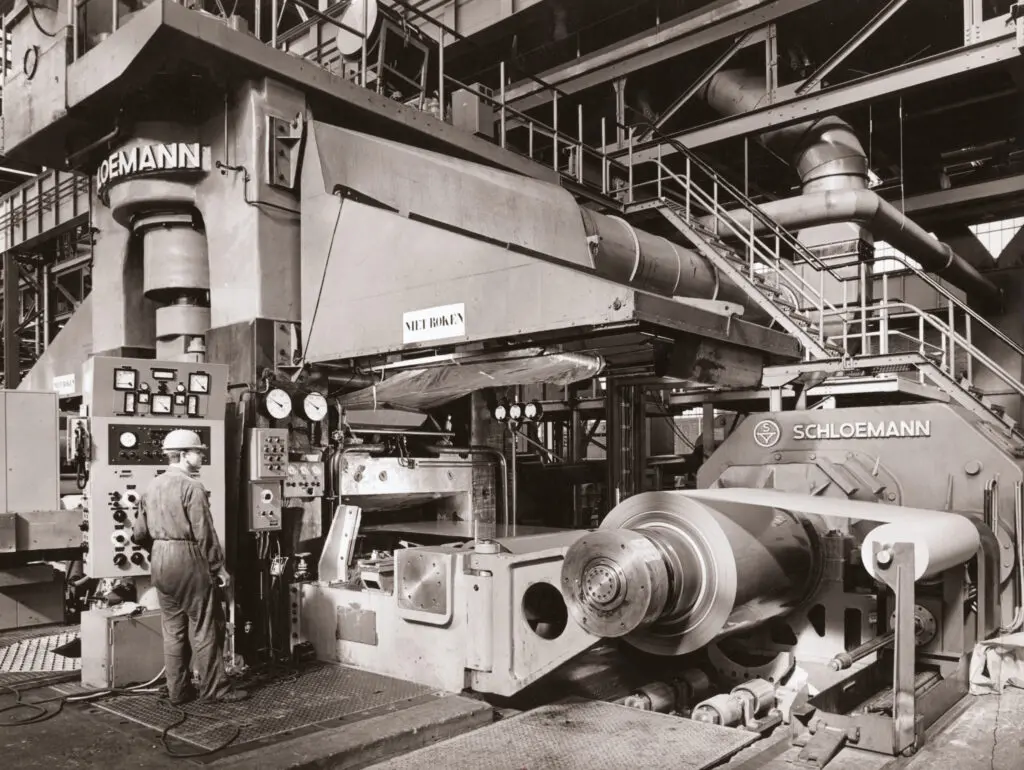
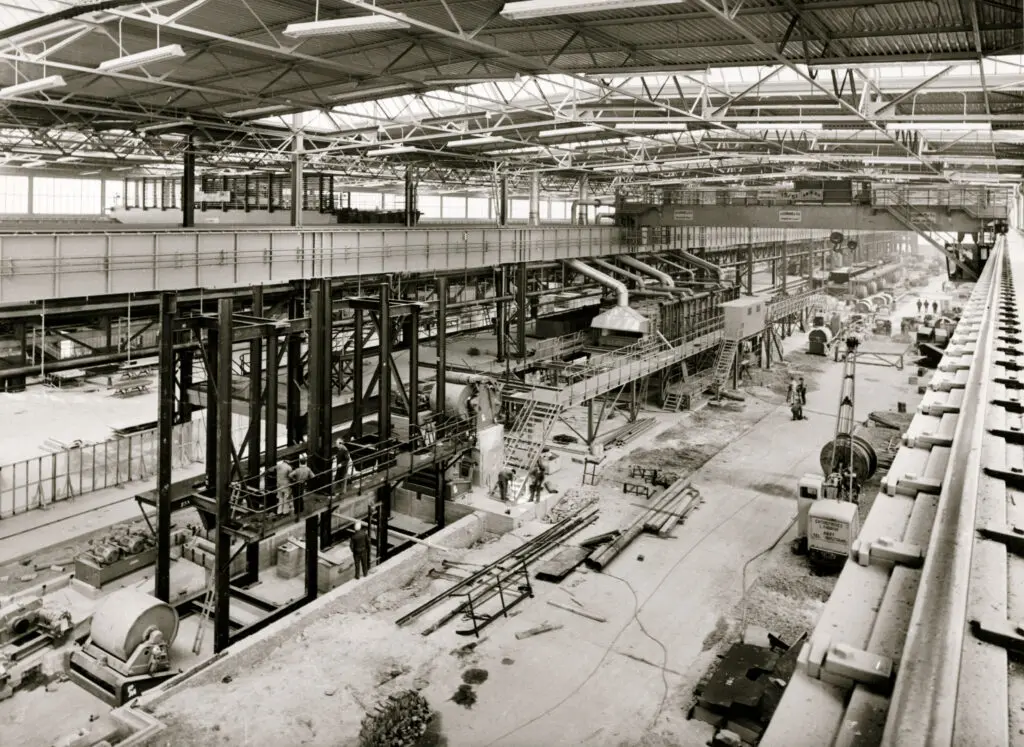
Cold Rolling Mill 1, 1960s
In its early years, Genk was primarily a cold rolling site, processing hot-rolled coils from the United States. Stainless steel was still a relatively new and complex material, and the first employees had to develop much of the necessary expertise themselves.
Finding the right skills was also a challenge in a region traditionally shaped by agriculture and coal mining. Many employees learned a new industry as they went, helping to build the expertise that would shape the site for decades to come.
From the very beginning, the people of Genk, known locally as the ‘Genkois’, showed a strong willingness to roll up their sleeves, solve problems and move forward. That mindset would become one of the defining characteristics of the site.
The transformation into a steel producer
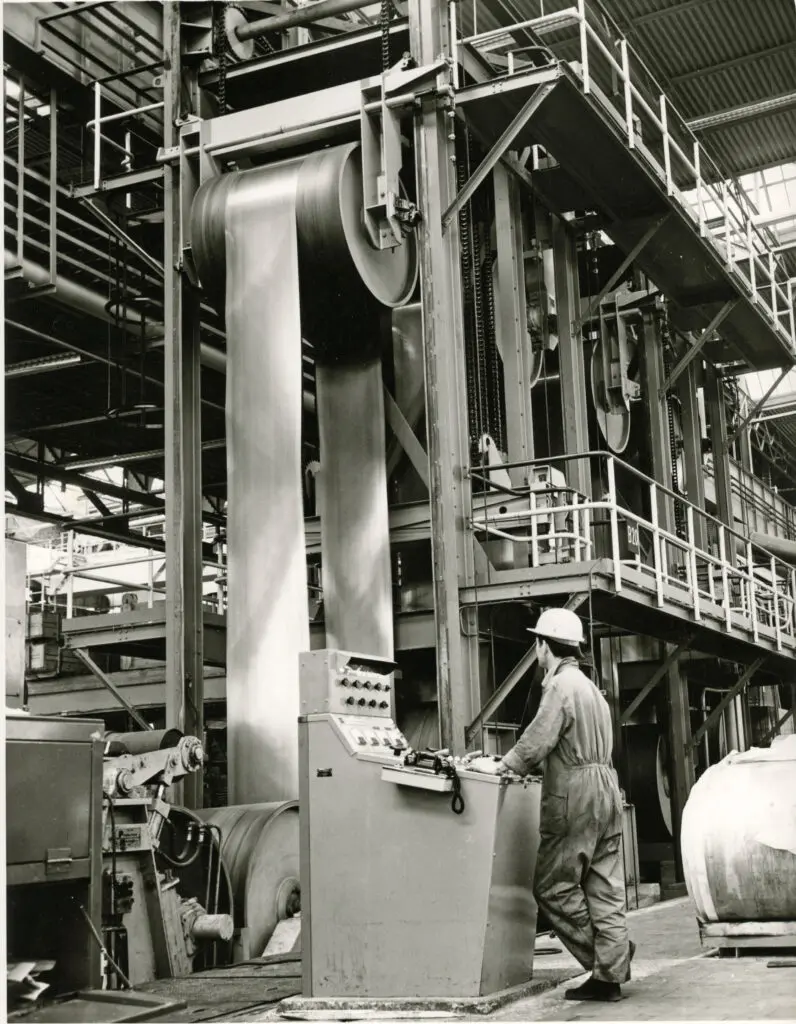
Annealing and Pickling Line BUL1
While the Americans initially wanted to focus solely on cold rolling to benefit from processing imported coils, Coppée had already been dreaming of an in-house steelmaking facility since 1961. That ambition became reality in the 1970s.
In 1974, the company adopted the name ALZ, and in 1976 Genk built a revolutionary continuous casting installation, definitively establishing the company as a fully-fledged, independent steel producer.
The bold leap to “thick and wide”
The early 1980s marked another defining moment in the history of Genk.
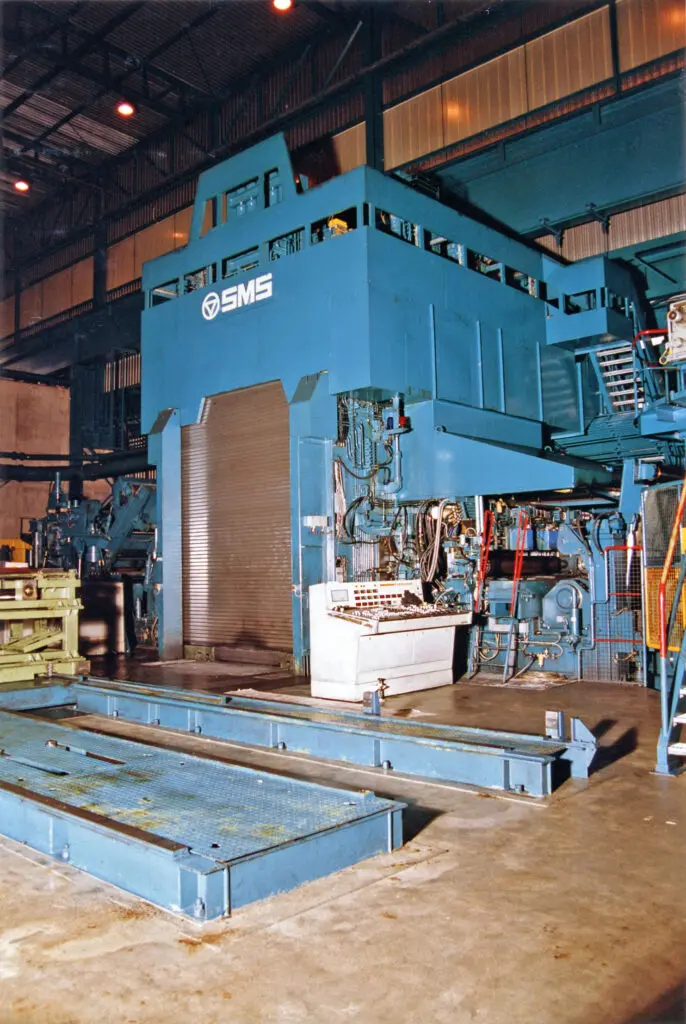
ALZ took the bold decision to produce cold-rolled stainless steel up to two metres wide. Until then, the market had mainly focused on narrower sizes. ALZ recognised that major industrial customers needed wider plates, among other things to reduce the number of welded joints in their constructions. At the time, this was a major technical challenge: standard machines simply did not exist for such specifications.
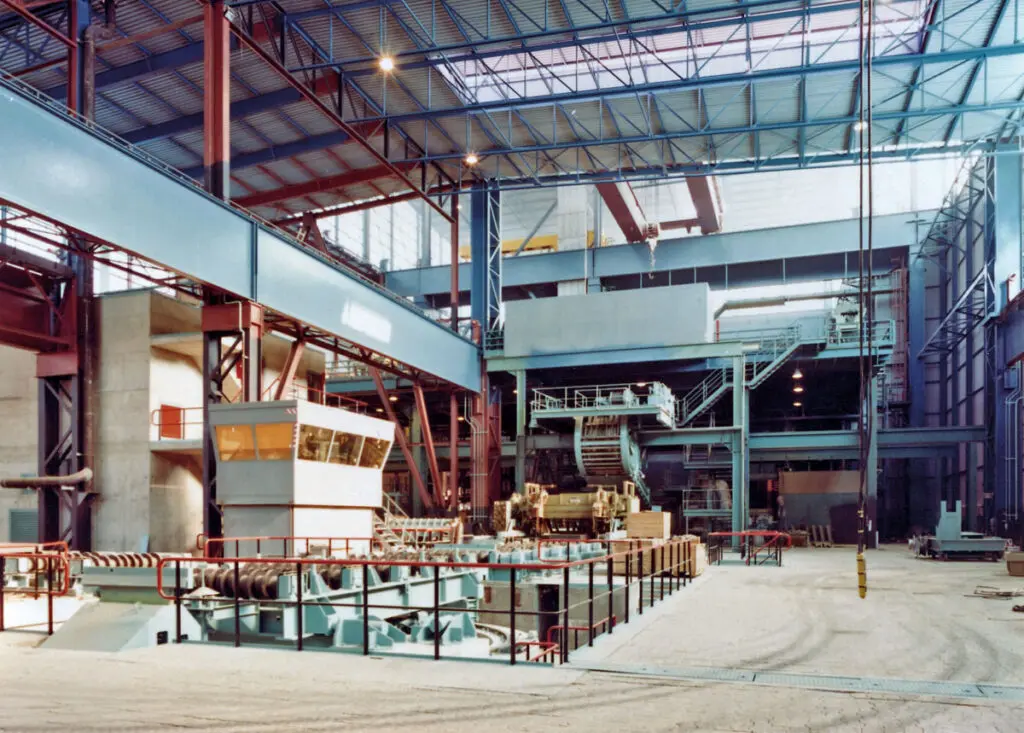
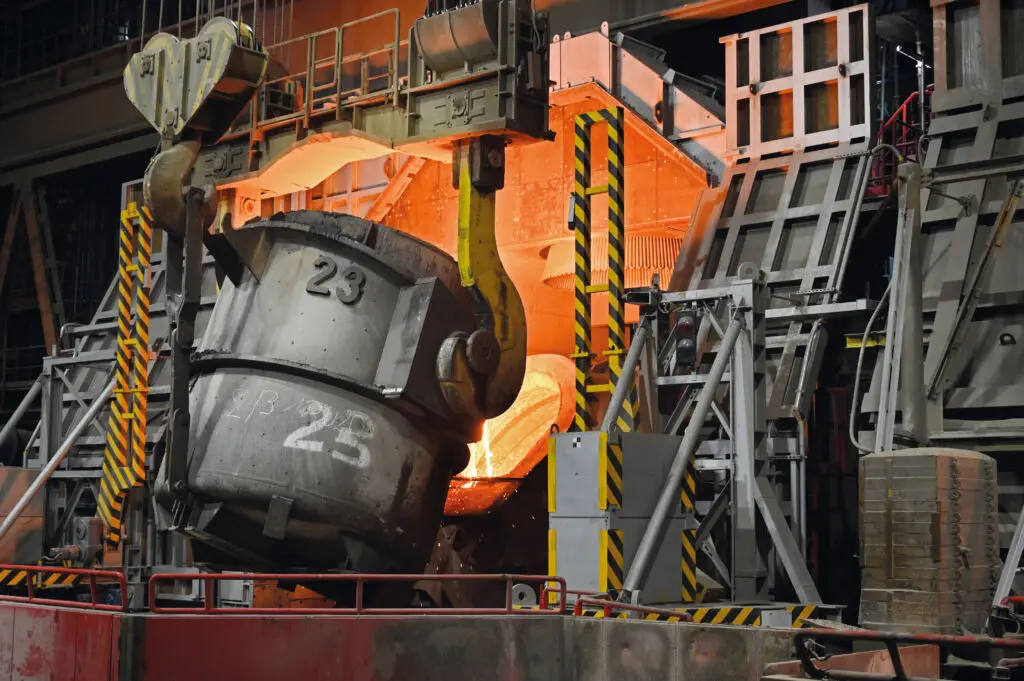
Steel Plant, 1970s
Steel Plant, 1970s
New machines had to be developed that were not only wider, but also significantly more powerful than the equipment normally used in the industry. The start-up of new installations, including MKW 2, presented major technical challenges and required complex adjustments.
Yet this determined Genk spirit of innovation proved to be the key to success. It put the company firmly on the global map as a unique player willing to invest where others hesitated. More than that, this pioneering spirit helped shape the culture of innovation that characterises the site today.
Investing in the future
Over the following decades, Genk continued to evolve as the stainless steel industry changed. After becoming part of larger international groups, the site became part of Aperam in 2011, marking a new chapter in its history.
Throughout these changes, investment remained a constant. Major projects progressively strengthened Genk’s capabilities across the entire production process, from steelmaking to finishing.
Investments such as AOD2, BUL4, CRM5 and BS5 have contributed to building today’s advanced production platform. They have strengthened metallurgical efficiency, annealing and pickling capabilities, cold rolling precision and finishing capacity. This enables the site to produce high-quality stainless steel for increasingly demanding applications.
Thanks to these investments, Genk can combine its long industrial heritage with modern technology and continue to respond to changing customer needs and new market opportunities.
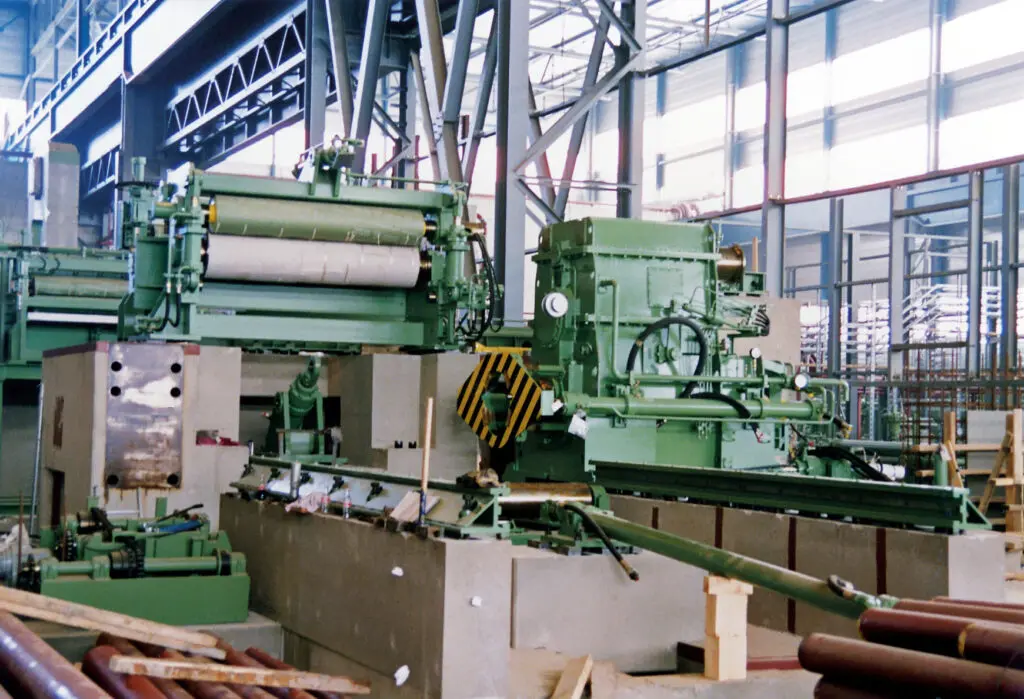
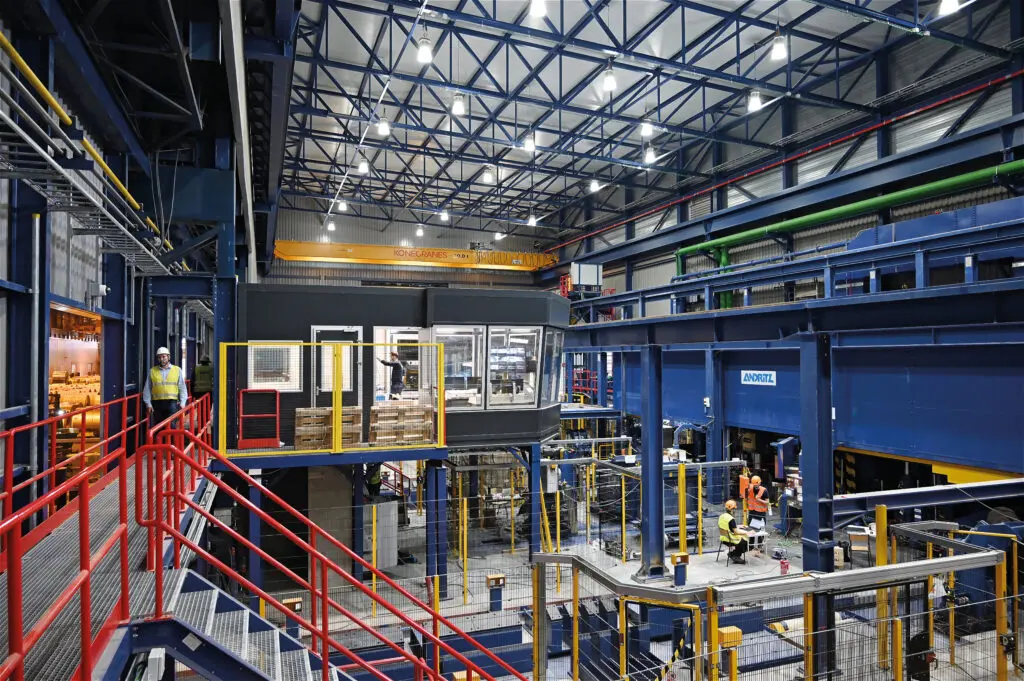
Construction of the Cold Rolling Mill, 2000
Building on 65 years of innovation
Looking back, the history of Aperam Genk is more than a succession of technological milestones. It is the story of people who have continuously adapted, learned new things and worked together to build something lasting.
From the first foundations along the Albert Canal to today’s advanced stainless steel production site, Genk has continually evolved while remaining true to the pioneering spirit at the heart of its origins.
Today, Aperam Genk builds on the foundations laid by its first pioneers 65 years ago. The history of the site shows that innovation is about more than technology. Behind every innovation are people: people with ambition, who saw opportunities, pushed boundaries and had the courage to take the next step, time and again. They are the ones who helped put innovation on the map and shaped the site into what it is today.
As we celebrate 65 years of Aperam Genk, we look back on the generations who helped write this history while looking ahead to the future.
65 years of pioneering spirit. 65 years of innovation. And a future still to be shaped.

 -1,69%